
Welcome to our December 2025 issue of Perspectives in Infant Mental Health.
In our first of three Clinical Papers, Victoria Yarzebski, Rebecca MacDonald, and Kathryn Couger describe a longitudinal case study documenting the emergence of prodromal signs of ASD and the implementation of a novel intervention beginning when the infant is 8 weeks of age. This fascinating case study details ASD symptom progression and presents a framework for a scaffolded preemptive intervention including developmentally-informed behavioral interventions aimed at optimizing outcomes for this group of infants.
Our next two Clinical Papers for this issue continue the focus of the last issue on decolonisation, by describing the development and implementation of two innovative methods of working to support IECMHC programmes within ethnically diverse and underserved communities. Amittia Parker, Natalia Castellanos González, Stephanie Mitchell, Karyn Hartz, and Deborah Perry describe their team’s efforts to develop and implement a decolonized, racial equity-centered approach to evaluating an established IECMHC program within a metropolitan region of the U.S., primarily serving Black and Latine populations in historically underserved communities. Similarly, Erin Snowden, Aza Nedhari, Deborah F. Perry, and Rabiyah Amina discuss the culturally congruent Mamatoto Village’s Mothers Rising Home Visiting (MRHV) program which they describe as ‘exemplifying what is possible when reproductive justice, cultural humility, and community leadership are central to care. They describe how ‘through rigorous workforce development, culturally reflective services, social connection, and an intergenerational approach’ MRHV can be used to advance health equity and foster community resilience.
Our Professional Development paper, also continues the theme of our last issue on decolonisation, in which Marva Lewis and Megan Smith present a process model of reflective practice based on what they describe as the ‘foundational principles of the sociocultural and psychological impact of the shared trauma responses of slavery and colonization that manifest as hidden Adverse Childhood Experience (ACEs)’ They provide a checklist tool to guide the decolonization of reflective practice in a relationship-based space for both supervisor and practitioner. The paper concludes with a call to action for training local groups of IECMH professionals ‘to collectively examine and develop tools based on local cultural beliefs, values, and norms within the communities they serve’.
Our first Community Voices paper by Niels Rygaard highlights reflections on the intercultural cooperation involved in the delivery of a Global Infant Mental Health Program (Fairstart) including educating 950 staff for NGO and government partners in 38 countries. The paper describes an innovative model in which students train groups of parents, foster parents, and teachers with sessions in attachment-based care and learning, that has reached over 100,000 infants and children.
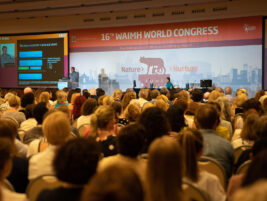
Roop Zainab Rana then describes Pakistan’s first international conference on infant and early childhood mental health in the Spring of this year. Entitled “The Baby Matters Conference”, this landmark event featured 15 distinguished speakers from Australia, Canada, the Philippines, South Africa, and the United States as well as multidisciplinary experts from across Pakistan, gathering over 1,000 participants both in-person and online.
In our Opinion Piece for this issue Kevin Nugent, Susan Nicolson, Campbell Paul, and Lise Johnson propose that the human rights guarantees for newborns and their families enshrined in The United Nations Convention on the Rights of the Child, can be put into practice as part of high-quality healthcare through the use of the Newborn Behavioral Observations (NBO) system. The NBO emphasises the infant’s personhood and relational agency from the moment of birth, serves as human rights advocacy, in terms of affirming the newborn’s rights to dignity and respect and to be an active participant in their family, community and culture.
Finally, our Book Review by Arietta Slade describes the many joys of Claudia Gold’s newly published book: Getting to Know You: Lessons in Early Relational Health from Infants and Caregivers.
Please note that our Special Issue for August 2026 focuses on innovative work with Fathers. Please let us know if you have a piece that might fit into one of categories: Research; Clinical; Professional Development; Ethics; Community Voices; Opinion Pieces or letters (see Guidelines for Authors – Perspectives).
In the meantime, very best wishes for a Happy Holiday at the end of what has been a very difficult year for many people across the globe.
The WAIMH Perspectives in Infant Mental Health editorial team
Jane Barlow, Editor-in-Chief, United Kingdom
Salisha Maharaj, Assistant Editor, South Africa
Maree Foley, Associate Editor, Switzerland
Jody Todd Manly, Associate Editor, United States
Azhar Abu Ali, Associate Editor, United Arab Emirates
Patricia O’Rourke, Associate Editor, Australia
Joy Osofsky, Associate Editor, United States
Harleen Hutchinson, Associate Editor, United States
Michelle du Plessis, Associate Editor, South Africa
Nicki Dawson, Associate Editor, South Africa
Lauren Keegan, Editor, Australia
Veronica Mestre, Intern Editor, United States
Neea Aalto, Production Editor, Finland
Perspectives in Infant Mental Health Vol. 33 No. 3 | December 2025
Authors
Jane Barlow (United Kingdom), Editor-in-Chief