Dear colleagues and friends,
Here in the Northern Hemisphere we are experiencing perhaps the darkest months of the year. November is marraskuu in Finnish, with the word literally meaning death or dying and comes from us seeing plants die from cold. December days will also get shorter and shorter until the winter solstice makes the turn once again. Even though November and December here may sound horrible, they are months filled with work and activities and often the time just flies away.
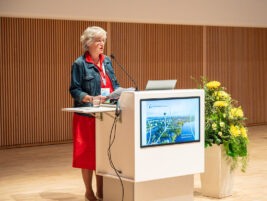
At the end of November I was invited to write a report for the Committee for the Future of the Finnish Parliament on parental mobile device use and its effects on child development. I also attended the report publication event as one of the panelists together with the other researchers writing for the same report, “Children in the Digital World.” Listening to my fellow writers Minna Ruckenstein and Suvi Uski in the panel discussion, I came to think about the film Ron’s Gone Wrong (2021). It is a 3D animated feature where a tech giant called Bubble creates a line of AI-powered robots called B-Bots, marketed as “your best friend out of the box.” These bots are marketed to parents with a statement that they help kids connect socially and give them a constant companion. But the catch is that the B-Bot is not just a friend but an algorithm that knows what the child wishes for even before they know themselves. And this is now not just a plot of a film but our everyday life, as algorithms and AI are everywhere in social media.
Suvi Uski’s report describes the current reality of Finnish youth: they spend up to 1,800 hours a year in social media – in practice another full day after school and hobbies. And when algorithms reward provocative content, even younger children learn that the more outrageous the content, the more likes you’ll get. Social media is not anymore a place where you share ordinary things like a picture of your birthday, but a global arena where emotions are sold and bought. Minna Ruckenstein explained the nature of algorithms; they are greedy. The algorithms want only one thing: our time. Also, the platforms where they appear are no longer regulated by any ethical standards. The more time our children spend on social media, the more data the tech companies get and the more commercial time they can sell. And when children are on TikTok, Instagram or YouTube, they don’t see the same content as “all the pals” but the content the algorithms think will keep them hooked. It can be a dance video, but it can also be images of how thin one ought to look or some influencer’s thoughts on how to be successful. No wonder we parents are sometimes confused about what our children are thinking and saying: where did that come from?
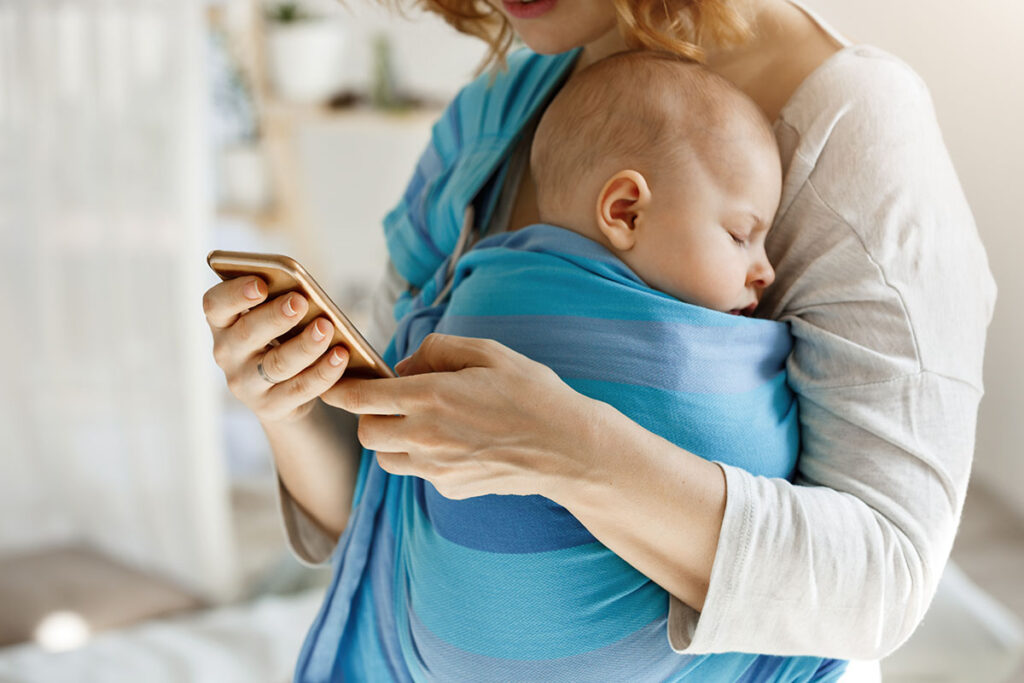
We parents ought to be wiser when it comes to digital devices and content, but the reality is that many of us scroll our own feed while children are trying to get our attention. Technoference – a fancy word for a smartphone or pad interrupting interaction with others – is a true phenomenon. And when parents are looking at the phone or screen, they are not paying attention to children’s needs and cues. For the youngest children this is particularly critical, as the early years are important for brain development. Parent-child interaction with gaze contact, shared joy and talking and playing together are needed also for building children’s self-confidence and sense of safety. Several studies from many countries show how repeated or long-lasting technoference increases the risk for children’s poorer speech and emotional development and may hamper even attachment relationships.
Due to the constantly fast technological development, we face new challenges that were not there twenty years ago. The report of the Committee for the Future of the Finnish Parliament is one attempt to recognize and tackle those, with suggestions for recommendations for parents and even more importantly for the government. In addition to the new challenges, families in many countries are still facing poverty, natural disasters and armed conflicts. How to battle these huge challenges without becoming hopeless? One thing is for sure: we need each other’s support in our daily work for young children and their families as well as new ideas on how to support them. We also need each other to think about how we can get governments and policymakers to listen to us and make changes for the better.
Spreading knowledge and ideas on how we can make a difference is one of WAIMH’s main goals. The submission of abstracts for our 19th World Congress in Toronto in October 2026 has just ended, and within the submissions there is both clinical and research knowledge on what works in promoting infant and early childhood mental health. In addition to the program, the Toronto Congress provides unique opportunities for networking with people from many countries and many occupations. October 2026 is less than a year from now, and I hope that many of you will find a way to come to the Toronto Congress and experience the warm hospitality of our Canadian hosts.
With my warmest regards to you all,
Kaija
Authors
Prof Kaija Puura
WAIMH Executive Director
Tampere, Finland