Key Words: Revitalization, Community Health Workers, Community Doulas, Ubuntu, Lakou, Etuaptmumk
Abstract
The enduring legacy of colonization continues to shape the field of Infant Mental Health (IMH), and professional development (Pro-D) spaces. Conventional approaches often prioritize individualization while neglecting the relational and communal contexts fundamental to wellness and thriving. This article advances revitalization: a deliberate return to relationship-based frameworks that nurture collective wellbeing across lifespans. Weaving Ubuntu, Lakou, and Etuaptmumk into IMH Pro-D offerings is a step towards revitalizing the field. Three exemplars Ubuntu, Lakou and Etuaptmumk, illustrate how revitalization creates possibilities for transformative relationships between professionals and those they serve.
Introduction
The legacy of colonization continues to shape professional development (Pro-D) in the field of Infant Mental Health (IMH). Historically, there has been a strong emphasis on evaluating, problematizing, stigmatizing, and treating individuals rather than addressing the broader relational contexts that support wellness. Colonization can narrow our understanding of health; reinforce deficit-based narratives; and isolate individuals from collective sources of healing that many cultures have long recognized. Revitalization can disrupt this pattern. Revitalization is a deliberate return to communal, relationship-based ways of knowing and being. We explore how Indigenous frameworks such as Ubuntu, Lakou, and Etuaptmumk offer pathways to more expansive IMH Pro-D. By grounding our practices in revitalization, we begin restoring relational ecosystems that foster thriving for children, families, and communities (Bundick et al., 2010). We take a multigenerational perspective, recognizing that a vision of nurturing wellbeing from pregnancy across the entire arc of life serves children and families best.
Reimagining professional development: Revitalization rooted in relational frameworks
Ubuntu, a Bantu African philosophy, “I am because we are,” and “a person is a person through other persons” emphasizes interdependence (Ngomane, 2014). Ubuntu teaches that children belong not just to their parents but to the entire community. This creates a shared responsibility for nurturing, where multiple adults contribute to a child’s development through collective caregiving practices. Within Ubuntu-inspired communities, children learn relational skills through immersion in multigenerational interactions. Early development is not a series of individual milestones to be achieved, but a process of becoming integrated into collective care and responsibility.
Lakou is a communal living system found in the rural provinces of Haiti. Historically, the term “Lakou” refers to clusters of homes where families of African descent reside, embodying an extended family structure that is prominent in Haitian and other Caribbean and African cultures (Edmond et al, 2007). Members of a Lakou work cooperatively to support one another financially and in other ways (LaRose, 1975). Raising children is viewed as a collective responsibility, where children and mothers benefit from interacting with a broad network of people who share wisdom, responsibilities, and resources (Ambert,1994). Lakou enables Haitian mothers to fulfill traditional roles, while emulating successful parenting models. Every member of the community contributes to children’s care and development. Within the Lakou, children are valuable assets. Each child’s success contributes to the Lakou’s wellbeing. Research indicates that as children age, they fulfill additional supportive roles by caring for younger siblings and connecting families, clans and villages with the larger community (Cayemittes et al,1995; Institut Haitien, 1989; Vimard, et al, 1991).
The deeply embedded roles children play in collectivist systems, which extend beyond those of children in nuclear families, align with broader relational values and worldviews of their culture. Ubuntu and Lakou recognize the centrality of relational networks in shaping collective wellbeing across the lifespan. By centering community-based, relational approaches to nurturing, both challenge the reductionist, individual-centered approach evident in Western frameworks, where IMH is often addressed separately from social and cultural contexts.
Etuaptmumk, (Two-Eyed Seeing) and its corollary, Trees Holding Hands, are guiding principles (IISH website, 2025) that Mi’kmaq First Nations Elders in Northeastern North America embody and teach through stories beginning when children are very young (Marshall et al., 2023; Iwama et al., 2009; Labrador, 1997). Children and youth learn to practice mindful noticing, cultivate mutual respect, and recognize the existence of different worldviews. They learn to recognize and respectfully integrate strengths from different ways of knowing for the good of all. Etuaptmumk-inspired pedagogies help researchers, educators, and therapists unlearn white supremacy; pivot towards non-judgmental witnessing (Ginwright, 2022); and, how to reverse colonist-colonized power dynamics in relationships with one another, families and communities (David, 2024). Etuaptmumk is a path forward for those who aspire to implementing The Tenets (Irving Harris Foundation, 2012) and advocate for revitalization, and healing justice (Chang & Bryant, 2024; Charlot-Swilley et al., 2024). Mi’kmaw Spiritual Leader, Healer and Chief, Charles Labrador of Acadia First Nation, encouraged his people to believe in people: “It’s not we and them. It’s us. Trees hold hands. We as people need to do the same. [Then], walking forward together in good ways, we can share knowledge that has been conditioned by mutual respect.” (IISH website).
Ubuntu, Lakou, and Etuaptmumk represent holistic frameworks for emotional, social and relational wellbeing that are cherished by Indigenous cultures around the world. These pedagogies foster community-centered care by emphasizing interdependence and cultural relevance. Revitalizing IMH Pro-D must involve revising curricula to integrate Indigenous knowledge and multigenerational perspectives that augment professionals’ capacity for self-reflection, cultural humility, and compassionate curiosity. It’s not the family’s responsibility to adapt to oppressive systems; but rather the professionals’ responsibility to practice radical listening; yield power; adapt to and honor the family’s culture and expertise. IMH Pro-D efforts are called to advance equity, inclusion, restorative justice, and healing. To meet this call, professionals committed to revitalizing systems and practices can be guided by three core principles that promote healing, social change, and thriving.
Community-Rooted Healing and Wellness utilizes culturally specific modalities —movement, music, ritual, and storytelling— to develop emotional expression, self-regulation, and interpersonal connection. These practices serve as vital pathways for transmitting values, reinforcing belonging, and fostering thriving through shared experience —principles deeply relevant to community bonds and early relational health. When integrated into Pro-D frameworks, these approaches provide teams with experiential learning structures that revitalize individual and collective capacity while embedding mindfulness principles, Indigenous relational frameworks, and the healing potential of collective experiences.
Multigenerational Support recognizes that child development does not occur in isolation, but is deeply rooted in extended family and community structures, cultural heritage, and ancestral knowledge. Communities hold wisdom about healing practices that enables them to endure and transcend historical trauma through meaningful multigenerational engagement. Wisdom is passed forward and relationships are sustained across time. Integrating multigenerational perspectives into Pro-D strengthens professionals’ capacity for humble witnessing; expands understanding of caregiving networks; strengthens family-provider partnerships; and honors Elders and extended kin as essential contributors to child and community wellbeing.
Re-Claiming Identity centers storytelling and narrative as tools to affirm belonging, identity, and heritage while dismantling colonial myths that have othered, pathologized, and harmed communities. This principle invites professionals to reflect on their social-cultural identities, positionality and privilege to engage with families in ways that honor families’ lived experiences and cultural pride. Embedding radical listening and identity-affirming practices into Pro-D helps decolonize care models; fosters cultural humility; and establishes responsive, healing-centered approaches to supporting young children and caregivers.
Multi-relational Continuum: Pregnancy, Infancy, Childhood, and Youth
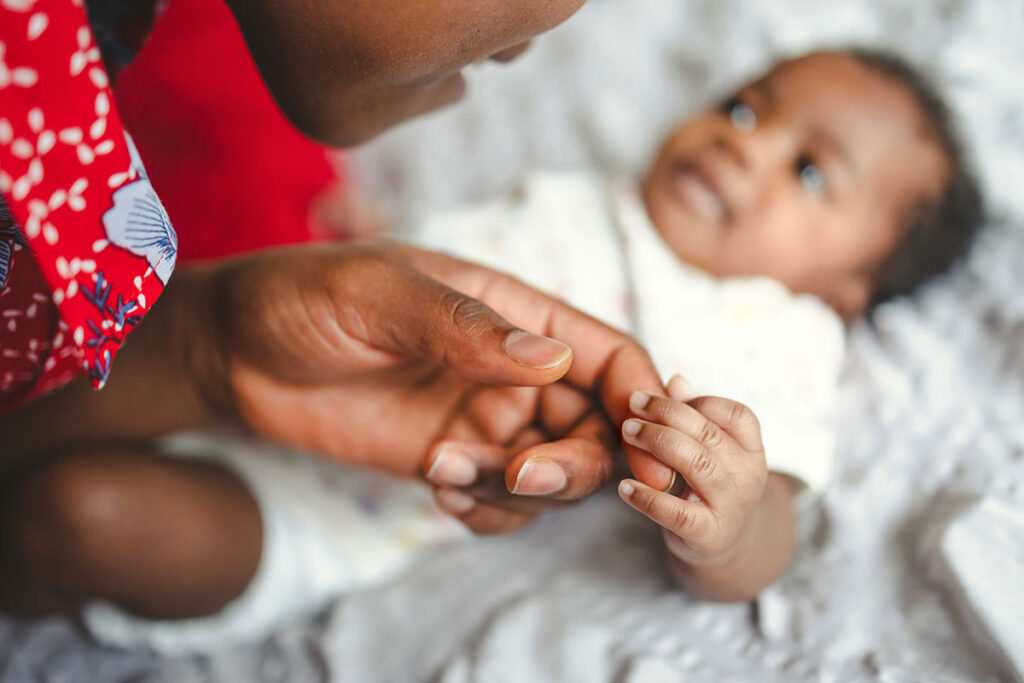
While much of mother/newborn dyad care continues to be provided by grandmothers, aunties, neighbors, sisters, two-spirit relatives, community healers and midwives around the world, in the United States many of these roles are fulfilled by community-based doulas. They are non-clinical providers of physical, emotional, educational and practical support to mothers and birthing families throughout the perinatal period (Bey, 2019). These doulas and the people they serve are usually members of the same communities, often comprised of Black, Brown, and other People of Color. They share an intimate understanding of social and structural barriers to optimal health (Johnson, 2024). Doulas’ reassuring presence not only promotes healing, rest, and bonding, but their culturally affirming practices contribute to the passing down of meaningful traditions central to families’ beliefs, identities, and values.
Studies have demonstrated the protective effects of doula care, recognizing them as a crucial part of the relational wellbeing workforce (Wint, 2019). Community-based doula care reduces stress, negative birth experience, and rates of postpartum depression (Bey, 2019). They actively engage partners in the pregnancy and birth (Falconi 2022), and leverage established trusting relationships to help clients access basic needs (Bruner, 2021). Community-based doulas embody the first universal relational health principle: community-rooted wellness and healing.
A noteworthy example is Hummingbird Indigenous Family Services in Washington State, which provides culturally responsive programs for Native American, Alaskan Native, Native Hawaiian, and Pacific Islander families. Their Indigenous BirthKeepers doula program connects families to doulas with shared culture who incorporate traditional knowledge to strengthen parent-community bonds. Their Pilimakua (pili, the ʻŌlelo Hawaiʻi word for connection, and makua, the Native Hawaiian/Kānaka Maoli tradition of parenting and caregiving as a whole generation) Family Connections Program include home visiting, parent groups, emotional peer support, and community connection events founded on principles of shared knowledge, cultural reclamation, sustainability, and self-compassion. Multigenerational perspectives are manifest in community-centered activities that recognize collective responsibility as Indigenous resiliency. Storytelling, music, dance and workshops connect families across generations to create books, blankets, and lullabies that lift up shared cultural identity. All three Relational Principles are represented in Hummingbird’s statement, “We tell these stories first and foremost for us, for the people. To remember to call back, to sing back, the vitality and the immeasurability of the worth and value of Indigenous mamas and children” (Hummingbird website, 2025).
Community health workers (CHWs) —trusted individuals who also have strong ties to their communities — are emerging as vital contributors to the IMH field. They help expand access to mental health (MH) services by bridging gaps in services; providing culturally responsive support; connecting families to resources; and promoting wellbeing through education and advocacy (Robertson et al., 2023; Barnett et al.,2018). Trusted CHWs create healing spaces that reduce stigma, improve access to care, and foster health literacy (Cohen & Andujar, 2022; Barnett et al., 2018). They are especially effective in early childhood settings, where they support families in homes, early learning programs, clinics, and communities (Robertson et al., 2023; Barnett, et al 2018). Their work strengthens relational health and helps ensure MH services are community and culture focused.
A powerful example is the Infant & Early Childhood Mental Health (IECMH) Family Leadership Certificate Program at Georgetown University, which exemplifies a revitalizing approach to service delivery and workforce development. This nine-month program, requiring no prior degree, builds CHWs’ competencies with a specialization in family and IECMH. Co-created with families and community leaders, the curriculum honors lived expertise and strengthens upstream prevention, early intervention, and attention to social determinants of health. It also opens professional pathways for community members, expanding the workforce across sectors serving young children.
A revitalizing approach to IMH centers community-led, culturally grounded practices by pivoting from deficit-based models towards models that recognize community knowledge, traditions, and strengths. Through trusted relationships, CHWs help support families in re-claiming identities that affirm their cultural heritage. Their work represents a holistic, culturally attuned, community-centered practices that honor families’ vitality. CHWs offer relational, home-based support; lead family empowerment programs; conduct community-based screenings; and foster peer support networks. These are revitalization activities because they place relationships, culture, and healing justice at the center.
Connection —the primal task of humanity— is a thread that extends from pregnancy through infancy, childhood, youth, adulthood, and elderhood. Ubuntu: “I am because we are. A person is a person through other persons” does not have a defined beginning or end. Ubuntu is relevant to MH across the arc of life. Taratibu Youth Association (TYA), a community-based performing arts organization rooted in Ubuntu and in the Circle of Courage framework (Brendtro et al., 2005), is another exemplar of a program that fosters positive, multigenerational mental health. It brings together youth, their young siblings, parents, and community elders. Adults make deposits in TYA children and youth by intentionally holding space with them; being fully present to their feelings and experiences; singing, dancing, exchanging stories and ideas with them (Greenfield, 2009). Youth internalize these ways of being with one another and pass it forward when they become parents. In this way, relational health extends beyond early childhood, offering IMH professionals a vision of positive parallel process from one generation to the next. Clearly, development does not occur in isolation. It is rooted in multigenerational caregiving, ancestral knowledge, and relational continuity. We invite you to scan our QR codes for additional information about TYA.
 Wawa Aba is the Ghanaian Adinkra symbol for toughness and perseverance.
Conclusion
Revitalization offers more than an alternative to traditional Pro-D in IMH. It represents a necessary reclamation of ways of being that honor relationality, interdependence, and community-rooted healing. By centering Indigenous frameworks such as Ubuntu, Lakou, and Etuaptmumk, and by learning from community-based exemplars like Community Doulas, CHWs, and TYA, we are reminded that wellbeing is not an individual achievement, but a collective practice. Revitalization is the reweaving of enduring wisdom into contemporary systems to foster emotional, social, and relational thriving. As we reimagine Pro-D through this lens, we create the conditions for infants, young children, and families to flourish, and for communities to heal, regenerate, and lead from their strengths and histories. Revitalization of IMH “must not just heal, liberate, and empower individuals and communities, it must also… heal and improve a broken, sick society” (David, p.74).
References
Barnett, M.L., Gonzalez, A., Miranda, J., Chavira, D.A., Lau, A.S. (2018). Mobilizing Community Health Workers to address mental health disparities for underserved populations: A systematic review. Administration & Policy in Mental Health. Mar;45(2):195-21.
Bey, A., Brill, A., Porchia-Albert, C., Gradilla, M., & Strauss, N. Advancing birth justice: Community-based doula models as a standard of care for ending racial disparities. (2019). Every Mother Counts. NY, 2019. https://everymothercounts.org/wp-content/ uploads/2019/03/Advancing-Birth-Justice-CBD-Models-as-Std-of-Care-3-25-19.pdf
Brendtro, L., Brokenleg, M., & Van Bockern, S. (2005). The Circle of Courage and positive psychology. Reclaiming Children and Youth, 14(3), 130-136.)
Bundick, M.J., Yeager, D.S., King, P.E., & Damon, W. (2010). “Thriving across the life span” in The Handbook of Life-Span Development, Vol. 1: Cognition, biology, and methods. Lerner, R.M. & Overton, W.F., (Eds.) John Wiley & Sons Inc.
Cayemittes, M., Rival, A., Lerebours, G., Barrere, B. (1995). Haiti survey on mortality, morbidity and utilization of services 1994/95. Summary Report. Petion-Ville, Haiti, Institut-Haitien de l’Enfance, (22).
Chang, D.F., & Bryant, L.L., Eds. 2024). Transforming careers in mental health for BIPOC: Strategies to promote healing and social change. NY: Routledge.
Charlot-Swilley, D., Thomas, K., Mondi, C. F., Willis, D. W., & Condon, M.-C. (2024). A Holistic Approach to Early Relational Health: Cultivating Culture, Diversity, and Equity. International Journal of Environmental Research and Public Health, 21(5), 563. https://doi.org/10.3390/ijerph21050563
Cohen, J., & Andujar, P. (2022). Infant and Early Childhood Mental Health (IECMH): Laying the groundwork for all future development. Infant and Early Childhood Mental Health Technical Assistance Center. https://gucchd.georgetown.edu/Docs/iecmh/IECMH%20-%20Laying%20the%20Groundwork%20for%20All%20Future%20Development.pdf
David, E.J.R. (2024). Decolonizing research: Some tips to heal the damages of a sick world. In Transforming careers in mental health for BIPOC: Strategies to promote healing and social change,F. Chang & L.L. Bryand (Eds.). Routledge. pp. 71-80. DOI: 10.4324/9781003309796-8
Edmond, Y.M., Randolph, S.M., & Richard, G.L. (2007). The Lakou system: A cultural, ecological analysis of mothering in rural Haiti. Journal of Pan African Studies, 2, 19-32. http://www.jpanafrican.org/docs/vol12no11/TheLakouSystem.pdf.
Falconi, A.M, Bromfield, S.G., Tang,T., et al. (2022). Doula care across the maternity care continuum and impact on maternal health: Evaluation of doula programs across three states using propensity score matching. eClinical Medicine, 50:101531. https://doi.org/10.1016/j.eclinm.2022.101531
Ginwright, A. (2022). The four pivots: Reimagining justice, reimagining ourselves. North Atlantic Books.
Greenfield, P.M. (2009). Linking social and cultural factors to child development: A cross-cultural perspective. Journal of Child and Family Studies, 18(4), 401-410.
Hummingbird Indigenous Family Services: https://www.hummingbird-ifs.org/
Institute for Integrated Science & Health: http://www.integrativescience.ca/Principles/
Institut Haitien de Statistique et d’Informatique: Division d’Analyse et de Recherche Demographique (1989). A study of the relationship between population and regional development in Haiti.
Irving Harris Foundation (2012). The diversity-informed tenets for work with children and families. https://diversityinformedtenets.org/download-the-tenets/
Iwama, M., Marshall, A., Marshall, M. & Bartlett, C. 2009. Two-Eyed Seeing and the Language of Healing in Community-Based Research. Canadian Journal of Native Education, 32: 3-23. http://www.integrativescience.ca/Principles/TwoEyedSeeing/
Johnson, K., Shawky, H., & Willis, D. (2024, April). Community-based doulas and early relational health: The role of public policy and financing. Nurture Connection. https://nurtureconnection.org/resource/community-based-doulas-policy/
Labrador, C. (1997). Mi’kmawey: Advancing Mi’kmaq scholars and scholarship. Presentation at Cape Breton University, NS.
Marshall, A.D., Zimanyi, L., & Kewageshig, E. (2023). Walking Together. Toronto, CA: Annick Press.
Ngomane, M. (2020). Everyday Ubuntu: Living better together, the African way. Harper Design.
LaRose, S. (1975). The Haitian Lacou, Land, Family and Ritual. In Family and Kinship in Middle America and the Caribbean. Marks, A. & Romer, R. (Eds.). Willemstadt/Curacao, Institute of Higher Studies, Curacao. 482–501.
Robertson, H.A.; Biel, M.G.; Hayes, K.R.; Snowden, S.; Curtis, L.; Charlot-Swilley, D.; American Public Health Association: Community Health Workers, available at: https://apha.org/apha-communities/member-sections/community-health-workers
Taratibu Youth Association: https://www.taratibu.org/
Vimard P., Guillaume, A., Quesnel, A. (1991). Modifications of costs and benefits of children supported by parents: socio-economic differentiation and its impact on fertility: Evolution of fertility and the role of children in rural West Africa. International Union for the Scientific Study of Population [IUSSP] Committee on Comparative Analysis of Fertility and University of Zimbabwe Seminar on the Course of Fertility Transition in Sub-Saharan Africa, Harare, Zimbabwe.
Wint, K., Elias, T., Mendez, G., Mendez, D., & Gary-Webb, T. Experiences of Community Doulas Working with Low-Income, African American Mothers. Health Equity. 2019; 3(1): 109-116.
Authors
Charlot-Swilley, Dominique*
Department of Pediatrics, Georgetown University School of Medicine
United States
Condon, Marie-Celeste
Independent Reflective Consultant
United States
Little Victory, Arla
Taratibu Youth Association, Inc.
United States
Shawky, Hoda
Noorture, LLC
United States
Barclay Hoffman, Sarah
Children’s National Hospital
United States
Edmond, Yanique
University of Maryland Global Campus
United States
*Corresponding Author: dc1203@georgetown.edu