The Congress in Toronto is fast approaching, and I hope to see many of you there in October. I am especially grateful that it will take place in Canada, where we can come together in an open and free space to discuss our work from many perspectives.
At the same time, we cannot overlook the conflicts and natural disasters unfolding around our world, nor the particularly harsh effects on families with infants and young children. Many of us may feel that we are merely standing by, uncertain how best to help.
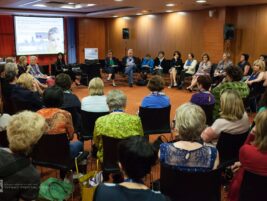
One response is to create a space for listening, dialogue, and collective reflection. At the Conference, several symposia will be held under the heading Infants in Global Crises. Contributors from different parts of the world will present the struggles faced by families with infants and young children in contexts of conflict and natural disasters.
As part of these symposia, we will present to delegates our newly drafted WAIMH Position Paper, Infant and Early Childhood Mental Health in Humanitarian Contexts. We look forward to a lively and stimulating debate, and perhaps to identifying ways in which we might feel less helpless.
On a more personal note, I have volunteered as a psychotherapist with an organization under the Early Light Foundation, which provides culturally grounded war-trauma therapy for children, families, and frontline workers affected by war. Through this work, I hope not only to support affected families, but also to learn more deeply what it means to work at the heart of these human-induced crises.
It has been a steep learning curve—one that has added a new dimension to my more than 30 years of work on the transgenerational transmission of trauma in the South African context. Children and families are profoundly affected by conflict, no matter which side of the divide they are on.
This is beyond politics. It is about the realities on the ground, wherever they are: stressed parents who are unable to contain their children, innumerable losses that are often transgenerational, and ongoing trauma with no clear hope of a “post-trauma” phase.
These complex dynamics need to be held and honoured for what they are in each context and for each individual family. That is our work, and it is what brings us together at WAIMH: shining a light on suffering and trying to alleviate some of it, wherever it occurs.
In this spirit, I hope to see many of you in Toronto for what promises to be a welcoming and stimulating Congress.
Authors
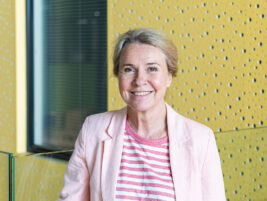
Astrid Berg, President of WAIMH,
Emerita A/Professor at the University of Cape Town,
Extraordinary A/Professor at Stellenbosch University,
Cape Town, South Africa