Dear Colleagues,
As I write this, there is another war taking place in the Middle East. People fearing for their safety, hiding in shelters or being hit unexpectedly by missiles while asleep – we cannot even begin to think where this leaves infants and young children. Our thoughts are with each and every family, struggling to make sense of the destruction that is all around. Our ability to influence these decisions is limited. When power and greed drives actions, relationships become secondary.
However, a group of both Israeli and Palestinian mental health activists have issued a joint appeal which appears in this Perspectives issue. While we feel helpless, we are also extremely grateful to this group of brave colleagues who speak out on behalf of infants and children. Let us, with them, concentrate on what we can achieve. Despite the turmoil and conflict in the world, we will keep our eye on the infant, toddler and young child and his/her family. This focus is our priority, and we will not lose sight of it.
This is the year of our World Congress in October. The Toronto Local Organizing Team as well as the Programme Committee have been hard at work to make this Congress a memorable one – being in Canada is going to be special – we will be assured of hospitality, generosity of spirit and a fine organization.
There will be an array of presentations from various countries, covering the many aspects of our field. Besides the scientific and clinical insights, this will be an opportunity to meet old friends and make new friends, to network and to exchange ideas and, perhaps most importantly, to support one another in these turbulent times.
Bringing into our awareness the various aspects of infant mental health is part of what our Congresses is about. But it is also what our Perspectives publications are all about. I want to thank the Editorial Team for pursuing this goal with such dedication.
It has indeed been timely and appropriate that the previous two issues have focussed on decolonization. While it is often challenging to think of how families who live in places far away from ours see and experience the world, it is our task to understand and be respectful of different worldviews. In essence, we as human beings, all struggle to make sense of the world, try to find meaning, and there is no one way superior or better than another.
This edition also brings news about a new, perhaps neglected focus, namely that of Ethics in IMH. An IMH Ethics Survey has been developed by the Infant Mental Health Ethics Collaborative, a group of clinicians representing different IMH disciplines and work settings in the USA and Australia. This team introduces the survey to our membership in this issue of Perspectives. Given the significant global challenges confronting our shared humanity, it is also pertinent for us as early intervention professionals to reflect on our daily practice, consider the ethical issues we encounter, and explore steps that could be taken to address the challenges that face us. We encourage you to consider participating in this brief survey, using the link provided in the article, Infant and Early Childhood Mental Health: Is it time for a Code of Ethics? (https://redcap.link/ethicsandinfantmentalhealth)
I look forward to seeing many colleagues and friends in Toronto in October.
Until then, keep safe and let us hope for peace.
Authors
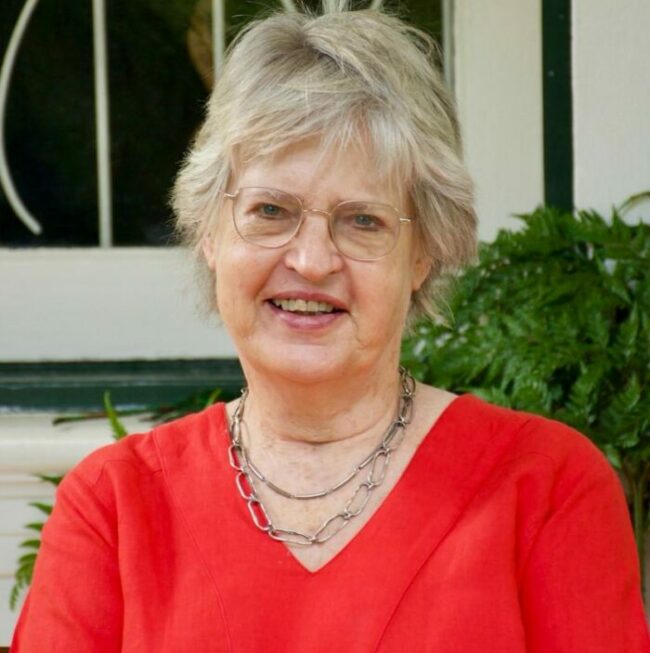
Astrid Berg, President of WAIMH,
Emerita A/Professor at the University of Cape Town,
Extraordinary A/Professor at Stellenbosch University,
Cape Town, South Africa