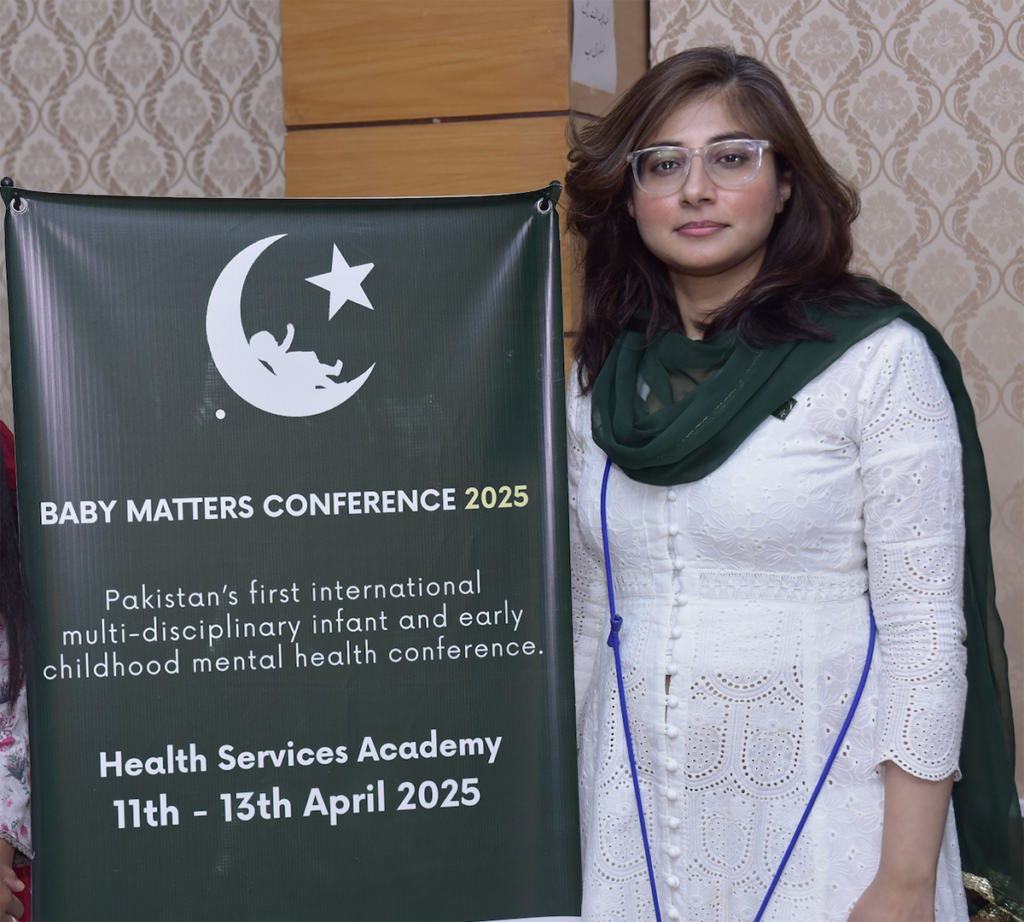
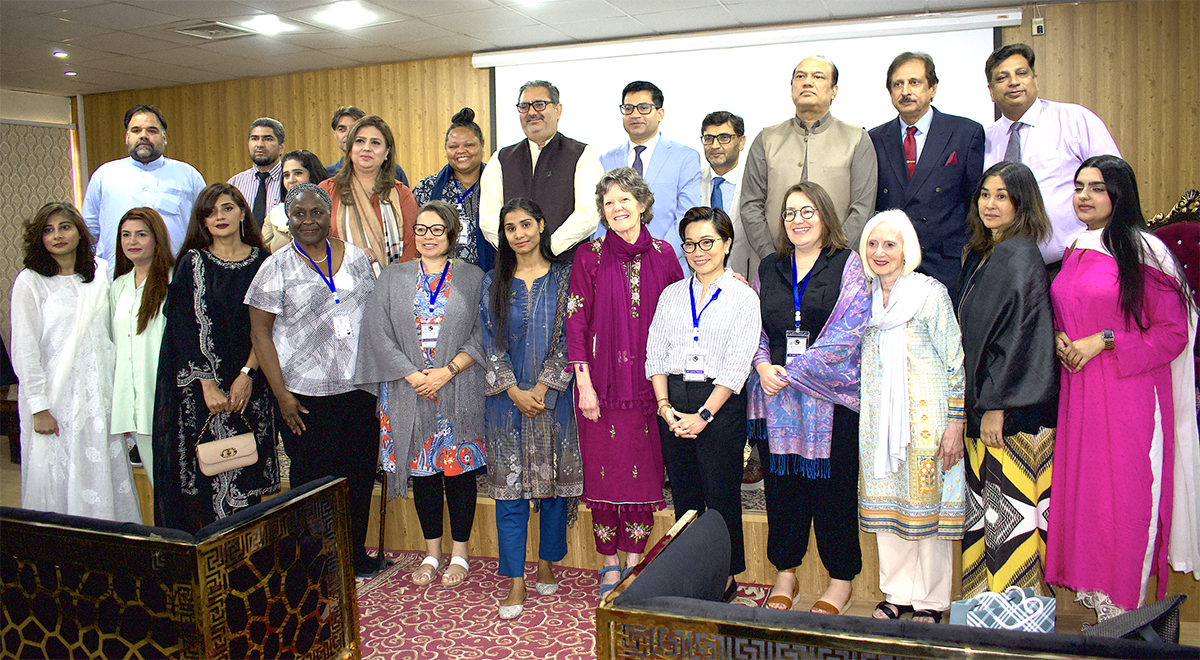
The Spring of 2025, brought with it Pakistan’s first international conference on infant and early childhood mental health, held at the Health Services Academy (HSA) Islamabad, from 11th to 13th April. Aptly named “The Baby Matters Conference”, this landmark event featured 15 distinguished speakers from Australia, Canada, the Philippines, South Africa, and the United States as well as multidisciplinary experts from across Pakistan, gathering over 1,000 participants both in-person and online.
Origins and Vision
The Baby Matters Conference vision was conceived through collaboration between the Fellows of the prestigious Zero to Three Fellowship (2022–2024) and realised through by support from the Health Services Academy (HSA) Vice Chancellor Dr Shehzad Ali Khan of the Health Services Academy University, whose forward-thinking vision and unwavering support made this event possible. National and International academic and social organisations such as The Healing Triad, Pakistan Institute of Living and Learning (PILL), Pahchaan, Omer e Rawan Foundation collaborated and organised workshops in five major cities, putting the “Honey Bee Model” into practice. Major educational and medical institutions across the country hosted workshops to train a variety of audiences, notably parents, educationists, health professionals, psychologists and policy makers. What began as a vision for change blossomed into a groundbreaking national movement to place infant mental health at the centre of national attention.
The Honey Bee Model: Diversity, Inclusion, Equity based Innovative and Inclusive Model of Public Health Care
The authors Honey Bee Model, was employed by the Baby Matters Conference as an innovative and inclusive approach inspired by the natural behavior of honey bees (Rana, 2020). Just as bees gather nectar from different flowers, transforming it into honey that nourishes the entire hive, this model emphasizes collecting knowledge and expertise from multiple global and local sources. The Model attempts to bridge the gap between research, health services, and health policy, by connecting the community, the researchers, health service providers, and the health policy makers. The Conference invited experts, researchers, academicians, policy makers, and community leaders, from across Pakistan and around the world. Delegates met at the “Hive”, the Department of Public Mental Health, at HSA, Islamabad. The purpose of the meeting on Day One was to share ideas around challenges in the field of infant mental health, existing models of child care, and take stock of existing realities. The ‘honeybees’ then travelled across Pakistan, to collect ‘nectar’. Academic activities, training workshops, interactions with parents, teachers, students, and health professionals were organised in the country through sessions in Lahore, Karachi, Rawalpindi, and Peshawar, as well as Islamabad. National and international experts and participants travelled between cities, cross-pollinating their knowledge and skills, to return to the ‘hive’ at HSA Islamabad. The Baby Matters Conference, therefore, became the first such activity to demonstrate the use of the Honeybee Model.
Workshops and Sessions
The Baby Matters Conference was conducted over the course of three days. Day One of the Conference was designed to showcase local expertise to international guests. Pakistani professionals from a wide range of government and non-government sectors, including public health, paediatrics, obstetrics, mental health, and policy makers, as well as academics shared the state of early childhood mental health practices in the country. This day served not only as an orientation for visiting experts, but also as a celebration of indigenous innovation, resourcefulness, and resilience in caregiving and clinical approaches. The core conference events at HSA began with a Pre-Inaugural Session featuring plenary speeches from Dr Rochelle Matacz, Dr Alexandra Harrison, and Dr Mary Dozier. This was followed by an Inaugural Ceremony, the chief guest of which was Dr Nelson Azeem, Member of National Assembly and Parliamentary Secretary National Health Services, Regulation and Coordination. Keynote speeches on the importance of early childhood mental health on lifelong wellness were given by Prof Charles Zeanah, international expert on Infant Mental Health, and Prof Mowadat Rana, Professor of Psychiatry and Behavioural Sciences. Sessions on integrating infant mental health into maternal and child health systems featured rich dialogue among speakers from diverse professional backgrounds including health policy, paediatrics, community health, and mental health. The evening session was chaired by Prof Abid Malik, head of the department of Public Mental Health in Pakistan, Prof Farid Minhas, world renowned expert on Psychiatry, and Child Trauma Research expert Dr Chandra Ghosh Ippen. Experts from across Pakistan talked about their work in integrating infant mental health into maternal and child health systems, perinatal mental health training, and capacity building for community health workers, and the development of childhood mental health services in Pakistan. The session featured rich dialogue among speakers from diverse professional backgrounds including policy, paediatrics, community health, and mental health.
Day two was dedicated to a bilateral flow (cross pollinations) of knowledge, infant mental health related skills, and the development of research ideas through interactions with health professionals and community. The international speakers, all of whom are globally recognized leaders in their fields, facilitated skill-based workshops across multiple cities. Each workshop was led by a trio of facilitators: an international expert, a Pakistani expert, and one or more co-facilitators. This collaborative model ensured contextually relevant teaching and grounded discussion. The sessions were structured in two parts: the first part involved the teaching of a particular skill or exploration of a theme in infant mental health and early childhood development. The second part invited reflection and co-creation with members of the community (ranging from parents, newlywed couples, students, teachers, and community leaders from various social classes to policymakers) to brainstorm potential research questions rooted in their lived realities. All activities planned on day two aimed to generate service delivery models in the field of infant and early childhood mental health care, based on indigenous needs, and data. The idea was simple, that research about a people must come from the people.
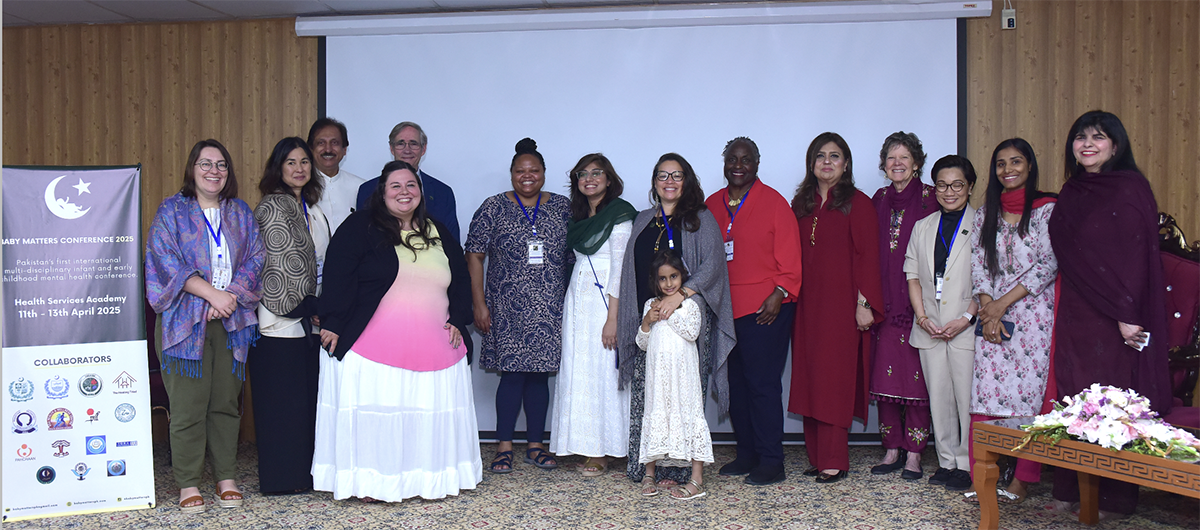
Workshops were tailored for a varied audience. One of the defining features of the Baby Matters Conference was its commitment to inclusivity and placing parents at the centre of conversations about early childhood mental health. Parents, policy makers, educationists, health professionals, community health workers, and psychologists all convened in the same learning spaces. This broke with the conventional format of scientific conferences, which often remain closed to laypersons. By bridging this divide, Baby Matters created a living laboratory for shared learning and co-creation of knowledge. In each one of five major cities, two types of workshops were held: one regarding normal development and promotion of mental health and one on identifying and managing infant mental health in medical settings.
At Iqra University, Karachi, a workshop on Wellness Through Play, was facilitated by Dr Yolanda Fountain Hardy, to teach parents the importance of play in child development and how to indulge in play with children who now increasingly spend more time indoors with very few peers, due to growing urbanization and the increasing numbers of families living in nuclear settings. Another prestigious venue in Karachi, Ziauddin University Hospital, hosted a workshop for health professionals, focusing on early childhood mental health: early detection and intervention, led by Dr Jessica Gordon. These sessions provided practical insights into evidence-based interventions and therapeutic play.
Lahore hosted two insightful sessions: Punjab University offered a comprehensive exploration of brain development from prenatal to five years, led by Dani Stamm Thomas, that was widely attended by parents, health professionals and educationists. Concurrently, the session at Mayo Hospital organised by Prof Nazish Imran, featured Dr Nicki Dawson, presenting Ububele’s Baby Mat Intervention, emphasizing responsive mental health practices. The evening session involved a planning session on how to indigenise and implement the Baby Mat Service in Pakistan at Pahchaan, a not-for-profit child rights and protection organization working to enhance and better the future of refugee families and those living in severely impoverished conditions.
Peshawar’s Khyber Medical College’s Department of Psychiatry organized a full-day workshop on nurturing early childhood mental health, with expert guidance from Dr Joanna Herrera and Dr Angel Belle Dy. The event was centred around integrating principles of infant mental health into paediatric practice, as paediatricians in Pakistan are the main touchpoint for parenting and child health advice for families. Paediatricians across the city rallied under Dr Arshia Munir, of the Pakistan Paediatric Association to attend this impactful session.
Islamabad hosted two impactful workshops at different venues. Dr Marva Lewis’s Touch Talk and Listen programme was presented at Islamabad Model College for Girls. A large audience of parents and educationists explored culturally informed caregiving rituals, highlighting practical strategies to foster joyful and connected parent-child relationships. The other critical session, conducted by Dr Chandra Ghosh Ippen, addressed the profound impact of early childhood trauma and effective intervention strategies at the National Disaster Management Authority. The aim was to educate disaster management policy makers on integration of principles of infant mental health into national disaster policy.
In Rawalpindi, the Institute of Psychiatry at Benazir Bhutto Hospital facilitated a workshop on grief-sensitive healthcare, expertly led by Dr Celeste Poe and Prof Asad Nizami, emphasizing compassionate clinical care approaches for families experiencing grief in the perinatal period. Healthcare professionals were then engaged in a skill building exercise in provision of grief sensitive healthcare, facilitated by Dr Sawera Mansoor. The evening session organised by Prof Azhar engaged participants on brainstorming research proposals on how to improve grief sensitive healthcare provision.
Another important activity was the inauguration of Pakistan’s first Wellness Centre for Mother and Child health in Rawalpindi. The Centre was inaugurated by Prof Charles Zeanah and a celebrity from the field of Obstetrics and Gynaecology, Prof Rashid Latif. This event brought together paediatricians, OBGYN’s and mental health professionals who agreed to come together to work on this initiative
Day 3 was structured as a day of synthesis and reflection. Pakistani and international experts reconvened to discuss the workshops, evaluate the quality and diversity of audience participation, and present the research proposals generated in the previous day’s sessions. This collective dialogue allowed for meaningful exchange, feedback, and refinement of ideas. The day concluded with a formal closing ceremony and press conference during which the outcomes of the conference—including proposed research, institutional partnerships, policy directions, and the establishment of an Infant Mental Health Repository—were officially announced.
Objectives and Outcomes
Central to the conference was the launch of the Baby Matters Campaign, aimed at raising awareness, fostering interdisciplinary collaboration, equipping caregivers and professionals, advocating policy change, and encouraging research. Notable outcomes included the formation of an Infant Mental Health Repository, presentation of 10 research proposals, introduction of five therapeutic methods, and establishment of a secretariat for the future Pakistan Affiliate of WAIMH. A significant highlight was the launch of a fully funded diploma in Public Mental Health for researchers engaged in infant mental health projects, and initiation of two PhD projects in the field of infant and early childhood mental health, HSAU.
Another major outcome was the drafting of a significant policy paper by Dr Roop Zainab Rana. This crucial session was chaired by Prof Abid Malik and Prof Mowadat H Rana, engaging discussions with prominent national experts including Dr Saadia Aseem, Dr Siham Sikander, Ayesha Mian, Brigadier Sikandar, and international authorities such as Profs Charlie Zeanah, Alexandra Harrison, Mary Dozier and Muhammad Zeshan. The Policy document had inputs from partner organisations such as HSA, Pakistan Institute of Living and Learning, and The Healing Triad.
A National Movement: Looking Forward
The Baby Matters Conference signified more than an event—it marked the birth of a transformative movement. Extensive media coverage underscored the national recognition of early mental health care. Future plans involve integrating infant mental health into national systems, solidifying a sustainable, evidence-driven framework.
In conclusion, Baby Matters set a robust foundation for continued advocacy and action, a commitment that every infant in Pakistan—and around the world—will receive the foundational support necessary for lifelong wellness and success. The next Baby Matters Conference will be held in two year’s time to discuss the progress of the projects initiated and continue to map the way forward.
References
https://www.app.com.pk/national/intl-baby-matters-conference-2025-concludes/#google_vignette
PAHCHAAN’s Baby Matters Conference 2025: Child Mental Health Starts Before Birth
https://www.nation.com.pk/14-Apr-2025/summit-ends-with-groundbreaking-announcements
https://tssw.tulane.edu/news/professor-presents-pakistans-infant-mental-health-conference
Authors
Dr Roop Zainab Rana
Chief Organiser, Baby Matters Conference 2025